 English
 Español

How to Buy a Sofa: A Practical Guide to Construction, Fabrics, and Fit
Posted by Admin | 09 Oct
Buying a sofa is one of the largest furniture investments a household makes, yet most buying decisions are driven by appearance rather than engineering. A sofa can look elegant in a showroom and still sag, creak, or lose its shape within two years because of a weak frame, low-density foam, or poor fabric selection. This guide walks through the practical checklist that matters most: measuring your space, inspecting construction, choosing the right fabric and cushion filling, matching the sofa type to your lifestyle, testing comfort, and setting a realistic budget for long-term value. By the end, you will know what questions to ask, what specifications to verify, and how to avoid the most common mistakes that lead to costly returns or premature replacement.
Measure Your Space Before You Measure the Sofa
The most common sofa buying error is choosing a model that fits the showroom but not the room. A large L-shaped sectional can block a doorway, crowd a hallway, or make a compact living room feel even smaller. Before browsing any collection, record three sets of measurements and keep them with you while shopping.
Room dimensions and clearance
Measure the length and width of your living area and note the positions of windows, doors, radiators, and wall outlets. Leave at least 45 centimeters of clear walking space on the main traffic side so that people can pass without squeezing past the sofa. As a general rule, a sofa should occupy one-third to one-half of the length of the wall behind it. A 3.6-meter-wide room usually handles a sofa of 2.2 to 2.6 meters, while a compact living room of around 2.8 meters calls for a sofa in the 1.8 to 2.1-meter range. If you are furnishing a smaller apartment, a two-seater loveseat or a compact three-seater provides the most efficient use of floor area.
Doorways, hallways, and elevators
Measure the width and height of every doorway, corridor, stair landing, and elevator opening the sofa must pass through. Sofas can be carried on their side, but the diagonal depth of the frame plus packaging must clear the narrowest point along the delivery route. Apartment dwellers should also note the interior depth and height of the elevator cabin, the width of the lift door, and the turning clearance on stair landings. A sofa that cannot reach the living room is a costly problem, so measure before you pay.
Create a floor plan
Sketch the room on graph paper or use a free measurement app, then place the sofa outline inside. Account for door swings, the reach of wall outlets, and the path from the entrance to the final position. Also consider how the sofa will look from other angles, since a piece that fits the wall may still block a window or crowd a side table.
Pro tip: Write your measurements on a note and keep it in your phone while shopping. When you see a sofa you like, compare the listed dimensions on the spot instead of relying on memory.
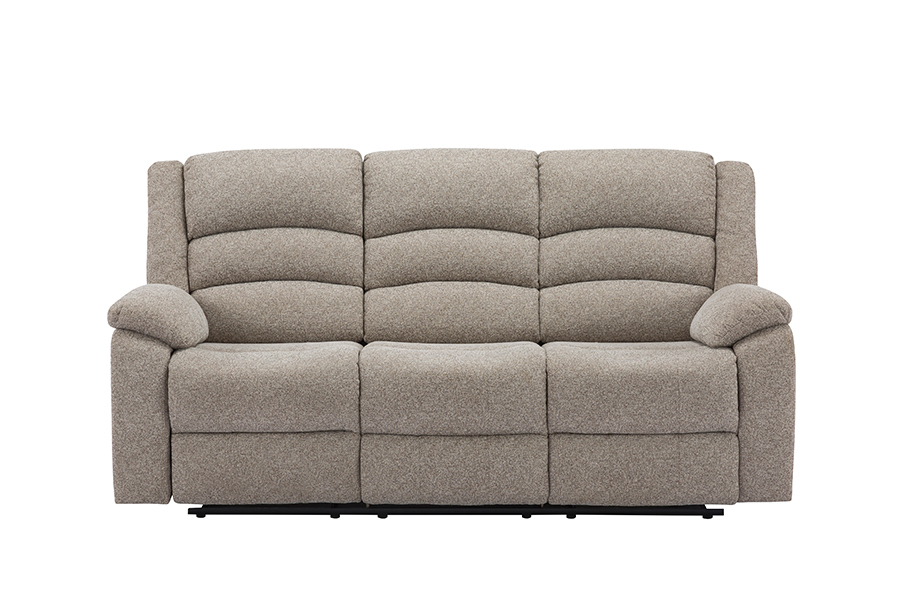
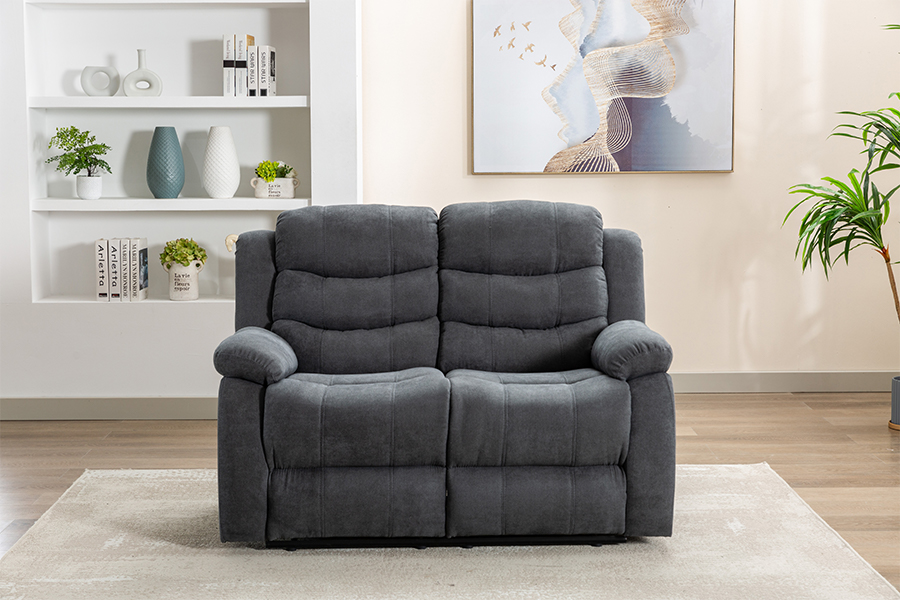
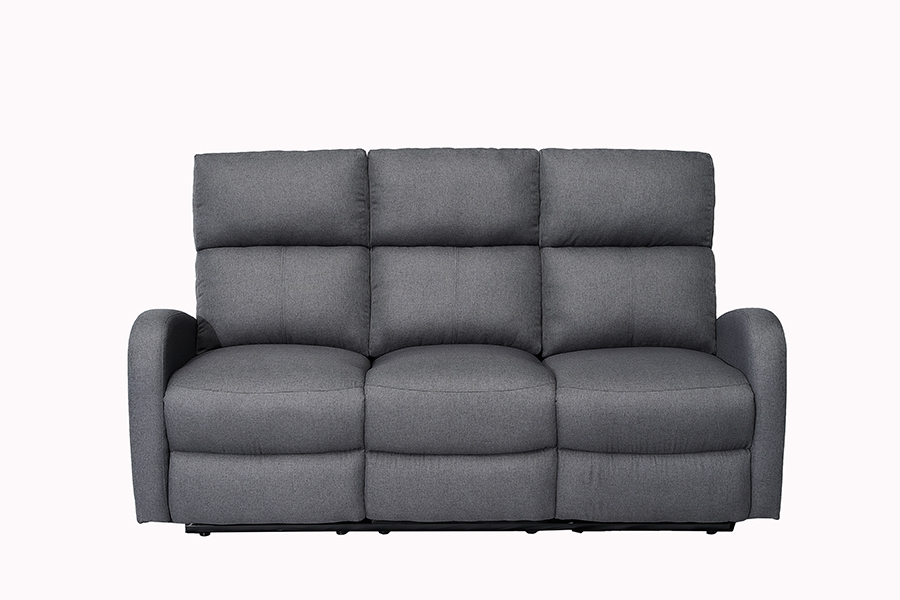 RC-2325 Smaller Living Room Apartments Compact Manual Reclining SofaDescription This compact reclining sofa perfectly blends comfort and style, making it ideal for smaller living rooms and apartments. Key features include:View Product →
Inspect the Frame, Joints, and Suspension
The frame is the skeleton of the sofa. An inexpensive sofa can look perfect on delivery and develop cracks, creaks, or sagging by the third year. The material and joinery of the frame determine how long the sofa will hold up under daily use, so it pays to ask about what you cannot see.
Frame materials compared
| Frame material | Typical quality class | Expected lifespan |
|---|---|---|
| Particleboard or MDF | Entry level | 2 to 4 years |
| Softwood such as pine | Mid-range | 5 to 8 years |
| Kiln-dried hardwood | Premium | 10 years or more |
Kiln-dried hardwood is the benchmark for durable seats. The drying process removes moisture from the wood, preventing warping and cracking over time. Corner blocks should be glued and screwed rather than stapled, and the frame should feel rigid when you push sideways on the arms or back. If the sales listing does not name the frame material, ask a direct question. If the sofa is sold by a manufacturer that maintains its own sales channel, you can contact the manufacturer directly to request frame, spring, and foam specifications before placing an order.
Suspension systems explained
The suspension supports the cushions and carries the body weight of everyone who sits on the sofa. Sinuous springs, also called zigzag wire, are the most common system in mid-priced sofas. What matters is the thickness of the wire and how it is attached to the frame. Spring clips are more secure than staples, and a frame with a center support rail prevents sagging. Eight-way hand-tied springs are a higher-end system in which each spring is knotted by hand into a web; they offer quieter and more even support but increase the price. Ask for a photo of the underside or a detailed specification sheet, because many retailers do not display this information.
Key threshold: 48 kilograms per cubic meter of foam density and a kiln-dried hardwood frame are the minimum specifications for a sofa that remains comfortable beyond ten years.
Choose the Right Fabric and Cushion Filling
Fabric and filling determine both the feel of the sofa and the way it ages. Two sofas with identical silhouettes can differ dramatically in durability because one uses a low-density foam core with a thin polyester cover while the other uses high-resilience foam and a performance textile. Learn to read the specifications before comparing prices.
Abrasion resistance and the rub test
Upholstery durability is measured by the Martindale or Wyzenbeek rub test, which simulates years of wear by rubbing fabric against an abrasive surface. For residential seating, a minimum of 15,000 Martindale rubs is the standard recommendation. In high-traffic households with children or pets, look for 30,000 rubs or more. Performance fabrics with a high rub count resist pilling, fraying, and color loss better than low-grade textiles.
Fabric options compared
| Fabric type | Durability | Best suited for | Key consideration |
|---|---|---|---|
| Polyester fabrics | Good | Everyday seating | Look for tightly woven blends |
| Polyester tech fabric | Excellent | Homes with kids or pets | Stain-resistant and easy to clean |
| Top-grain or full-grain leather | Excellent | Heavy daily use | Needs occasional conditioning |
| Faux leather | Moderate | Low-budget projects | Can peel in hot or humid rooms |
| Chenille or velvet | Fair | Formal sitting rooms | Absorbs stains, crushable |
If you prefer leather, choose genuine leather instead of bonded leather. Bonded leather is made from leather scraps mixed with resin, and it tends to peel after a few years of use. A full-grain or top-grain leather sofa will soften and develop a patina over time, but it is also easier to clean than most textiles.
Cushion filling: what actually matters
The density of cushion foam is the single most important specification for long-term comfort. High-resilience foam with a density of at least 3.0 pounds per cubic foot, roughly 48 kilograms per cubic meter, is the threshold for durable residential seating. Foam-and-fiber wraps, which combine a foam core with a polyester fiber layer, feel soft when new but flatten noticeably within the first year. Foam-down cushions use a dense foam core wrapped in down and feathers, offering a cushy top layer over a stable base. Full-down cushions are the most luxurious option but require regular fluffing and can feel too soft for people who prefer firm lumbar support.
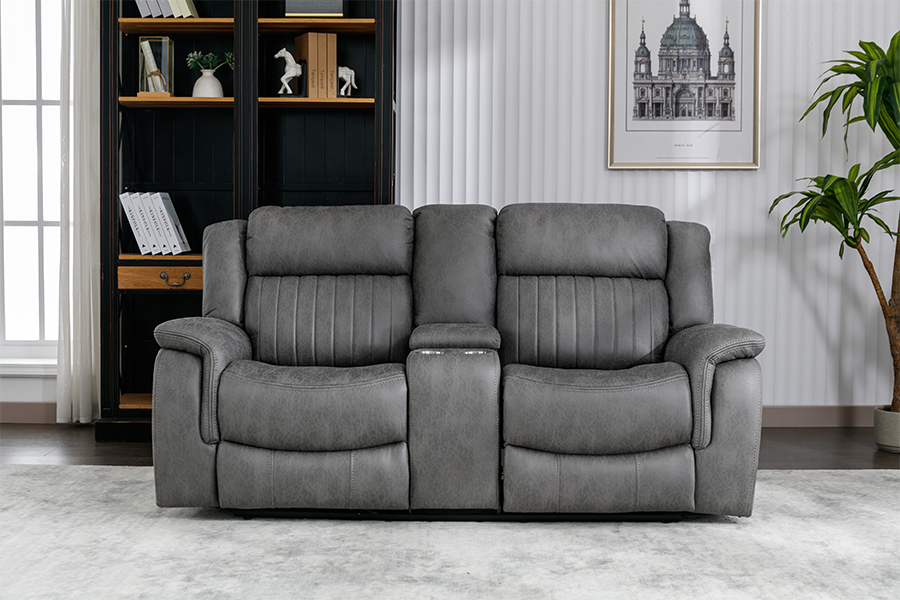
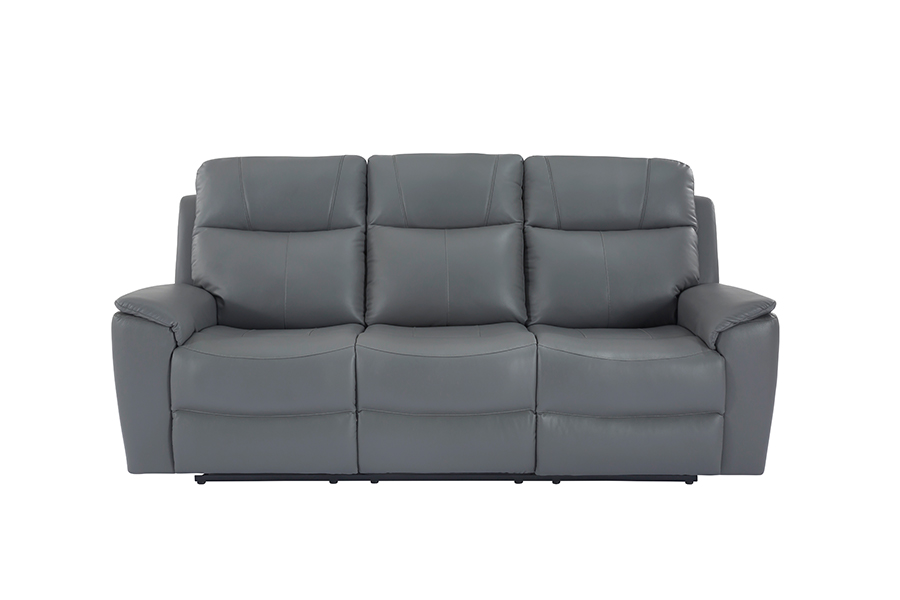 RC-2424 Faux Leather Manual Dual-Sided Recliner Sofa Attached CushionsDescription Designed for everyday ease, it features heavyweight padded faux leather upholstery accented with contrasting jumbo stitching for a modern, fashionable look.View Product →
Match the Sofa Type to Your Lifestyle
The right sofa type depends on how the room is used and how many people typically sit together. A household that hosts weekly movie nights needs different seating from a couple in a compact apartment. Consider the layout of the room, the number of daily users, and how often guests visit before choosing between a sofa, loveseat, sectional, or reclining model.
Common sofa types and their best uses
- Sofas: the most versatile option for standard living rooms, available in fixed, manual reclining, and power reclining versions. A three-seater fits most households.
- Loveseats: two-seaters that suit apartments, bedrooms, reading corners, or pairing with a larger sofa to create an L-shaped arrangement.
- Sectional sofas: L-shaped or U-shaped configurations that maximize seating capacity in open-plan living rooms and are ideal for family rooms and home theaters.
- Reclining sofas and power seating: designed for relaxation-focused spaces, with manual or motorized backrest adjustment; power models often include integrated charging ports.
- Lifting chairs: intended for elderly users or anyone with limited mobility; the seat tilts forward to help the user stand up more easily.
For a narrow rectangular room, a three-seater against the long wall is the most efficient use of space. For a square living room, an L-shaped sectional defines the seating area. In an open-plan kitchen-dining-living layout, a sectional can visually separate the lounge from the dining zone without adding walls. When comparing sectionals, check the seat depth, the direction of the chaise, and whether the configuration can be reversed. This guide to choosing the most comfortable sectional sofa explains the key features to evaluate before you buy.
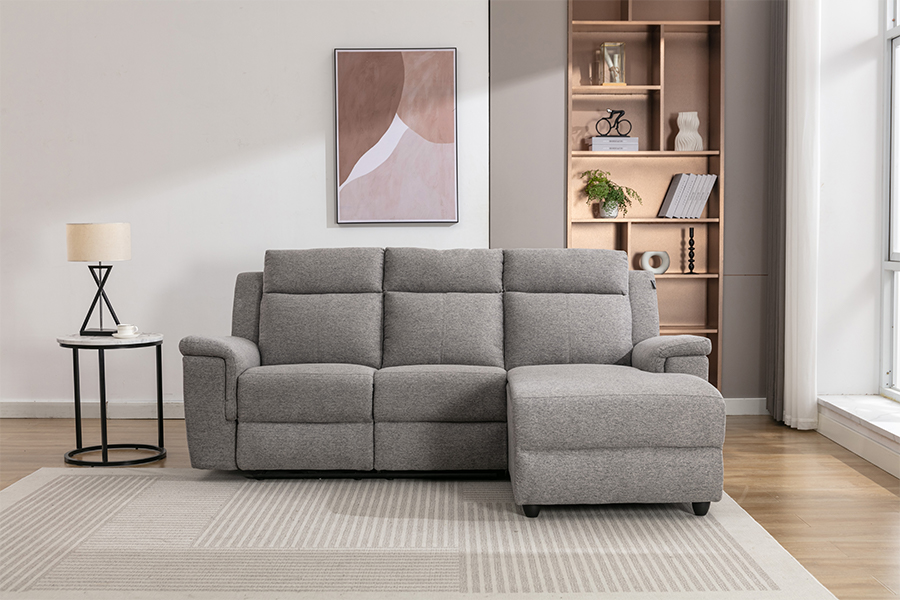 RC-7088 Thick Polyester Fabric Manual Reclining Sectional Sofa with Chaise Armrests and CuDescription This sectional sofa offers exceptional comfort with its plush cushions and modern, minimalist pillow-top armrests. The left-arm side features a convenient ...View Product →
Test Comfort: Seat Depth, Back Height, and Ergonomics
A sofa needs to support the natural curve of the spine, and different proportions work for different body types. A model that feels comfortable for five minutes in a showroom may become uncomfortable after a full evening of sitting. The critical dimensions are seat depth, back height, and armrest height.
Seat depth
Seat depth, measured from the front edge of the seat to the backrest, ranges from about 50 to 65 centimeters. A shallower seat around 50 to 53 centimeters supports upright sitting, reading, or working. A deeper seat from 56 to 65 centimeters permits lounging, napping, or sitting cross-legged. The ideal fit leaves a gap of 2 to 5 centimeters between the front edge of the seat and the back of your knees when you sit with your back against the backrest.
Back height and armrest height
Back height is measured from the seat surface to the top of the backrest. A low-profile back below 45 centimeters looks modern and expands the visual space, but it does not support the neck. A back height of 60 centimeters or more provides head support for people of average height, which matters for reading, watching television, or napping. Armrests set at seating height, roughly 63 to 68 centimeters from the floor, allow the arms to rest naturally. Higher armrests give extra support when standing up, which is why lifting chairs feature taller arm supports.
Set a Budget That Reflects Long-Term Value
Sofa prices range from a few hundred to several thousand dollars, but the sticker price alone does not tell you which sofa is the better value. Cost per year of use is a more useful number. A five-hundred-dollar sofa that needs replacement after two years costs two hundred fifty dollars per year. A twelve-hundred-dollar sofa that lasts ten years costs one hundred twenty dollars per year and is the more economical purchase despite its higher price.
| Price range | Typical construction | Expected lifespan |
|---|---|---|
| Under $500 | Particleboard frame, low-density foam, thin fabric | 1 to 3 years |
| $500 to $1,200 | Softwood frame, medium-density foam | 4 to 7 years |
| $1,200 to $2,500 | Hardwood frame and high-resilience foam, quality fabric | 8 to 12 years |
| Above $2,500 | Premium hardwood frame, premium filling, custom options | 12 years or more |
Before paying, confirm the warranty terms for the frame, spring system, and cushion foam. A manufacturer that offers a multi-year warranty on these structural components is usually confident in the product. Once the sofa arrives, following regular sofa maintenance routines extends the life of the upholstery and frame, especially in homes with pets and small children. Shake the cushions weekly, rotate them every season, and vacuum the upholstery to prevent dust from settling into the fibers. Avoid placing the sofa in direct sunlight for extended periods, because UV rays can fade fabric and dry out leather.
Value check: Divide the price by the expected lifespan. The result, not the sticker price, is the number that tells you whether you are getting a good deal.
Seven Common Sofa Buying Mistakes to Avoid
Certain buying mistakes come up again and again, regardless of budget or style preference. Run through this list to make sure you are not repeating any of them.
- Buying the cheapest option without checking the frame and foam specifications. The lowest price usually means the weakest construction.
- Ignoring the delivery path. Doorways, elevators, and stairwells often become the invisible obstacle that turns a purchase into a return.
- Choosing a seat depth that matches the showroom display but not the height or habits of the people who will actually use the sofa.
- Selecting a delicate fabric for a high-traffic living room. Velvet and chenille look beautiful but need far more maintenance than polyester or leather.
- Prioritizing plush softness over structure. A cloud-like seat often hides a weak frame or low-density foam that will collapse into discomfort.
- Forgetting about guests. A sofa that seats three in name may only sit two in comfort, so count the real seating capacity.
- Skipping the warranty and return policy details. Always confirm the return window, any restocking fee, and whether delivery and assembly are included.
Frequently Asked Questions
Q1: How long should a good sofa last?
A well-built sofa with a kiln-dried hardwood frame, high-resilience foam, and quality upholstery typically lasts 10 to 15 years under normal household use. Cheaper models with particleboard frames and low-density foam often need replacement after 2 to 4 years. The length of the frame and foam warranty is the easiest way to estimate service life before you buy.
Q2: What is the best sofa fabric for homes with children and pets?
Performance fabrics and tightly woven polyester blends with a rub count of 30,000 or above are the most practical choices. They resist staining, clean easily, and tolerate friction. Genuine leather is also a strong option, provided the sofa has a solid frame; bonded leather, on the other hand, tends to peel and should be avoided.
Q3: What seat depth should I choose?
If you prefer sitting upright for reading or desk work, select a seat depth of 50 to 53 centimeters. For lounging and napping, choose 56 to 65 centimeters. The correct depth also depends on your height: sit with your back against the backrest and check that 2 to 5 centimeters remain between the front edge of the seat and the back of your knees.
Q4: Are manual reclining or power reclining sofas better?
Manual recliners cost less, weigh less, and have fewer moving parts, which makes them simpler and cheaper to maintain. Power recliners offer smoother angle adjustment and convenience features such as charging sockets, but they require access to power and add complexity. Your choice should reflect how often you recline and where the sofa will be placed in the room.
Q5: Should I buy a sofa online or in a store?
Buying in a store lets you test comfort, judge fabric texture, and see the true color in person. Buying online offers a wider selection, better access to detailed specifications, and often more competitive pricing. If you shop online, verify the frame material, foam density, fabric rub count, delivery timeline, and return policy. Check customer reviews and real-life photos to confirm that the design matches the marketing images.
Related Products

 Floor 2 No.533 Shuangqiao Road, Dipu Street, Anji County, Huzhou City, Zhejiang Province, China.
 Josie@boshenfurniture.com
 0086-15105823033
Copyright © BOSHEN FURNITURE CO., LTD. All rights reserved.OEM/ODM Upholstered Seating Furniture Manufacturers
