 English
 Español

How to Choose the Perfect Sofa for Your Home: A Practical Buying Guide
Posted by Admin | 01 Oct
A sofa is the hardest-working piece of furniture in most homes. It hosts family conversations, supports evening movies, and absorbs the daily wear of children and pets. A poorly chosen sofa is not only an eyesore; it can cause back discomfort, block circulation in a small room, and create costly replacement cycles within a few years.
This guide provides a practical, step-by-step framework for choosing the perfect sofa for your home. You will learn how to measure the room accurately, compare sofa types, inspect frame and suspension quality, select the right upholstery, weigh manual and power reclining functions, and verify the ergonomics that matter most for your body. Use this framework in a showroom or apply it to specifications provided by a manufacturer before you place an order.
Start with the Room, Not the Sofa
The most common purchasing mistake is falling in love with a sofa style before checking basic geometry. Homeowners measure only the intended wall, order a beautiful sofa, and discover later that it blocks a radiator, collides with an entrance door, or squeezes the walkway. Start with the room, and every later decision becomes easier.
Record the length and width of the living area, ceiling height, and the exact position of windows, doors, radiators, and power outlets. In an open-plan space, use the sofa as a divider between the lounge and dining zones. Keep at least 60 cm between the sofa and other furniture to maintain a comfortable walking lane. If you use a coffee table, plan a clearance of 40 to 45 cm between the sofa edge and the table so you can reach your cup without leaning forward.
Then measure the full delivery route, not just the living room door. Note the width of the main entrance, hallway corners, staircases, elevator doors, and the final interior door. A stylish three-seater is useless if it cannot enter the building. When access is narrow, a two-piece configuration or a loveseat can be carried separately and set up inside the room.
Finally, match the sofa footprint to the viewing distance. For a 55-inch television, plan a seating distance of about 2.2 to 2.5 meters. For a 65-inch screen, increase the distance to 2.6 to 3 meters. A sofa that is too close to a large screen forces the eyes to scan wide areas and reduces comfort during long sessions.
When the room is tight, look for models with a reduced footprint. A compact two-seat design around 1.8 meters wide can serve a couple comfortably while leaving floor space for a chair or a plant. Compact reclining models are especially useful in apartments because they combine space efficiency with leisure function.
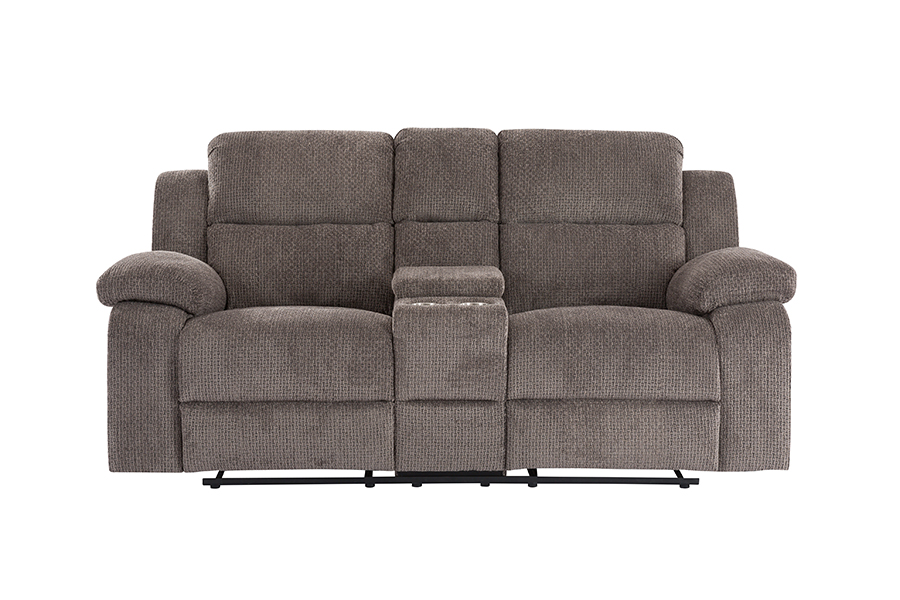
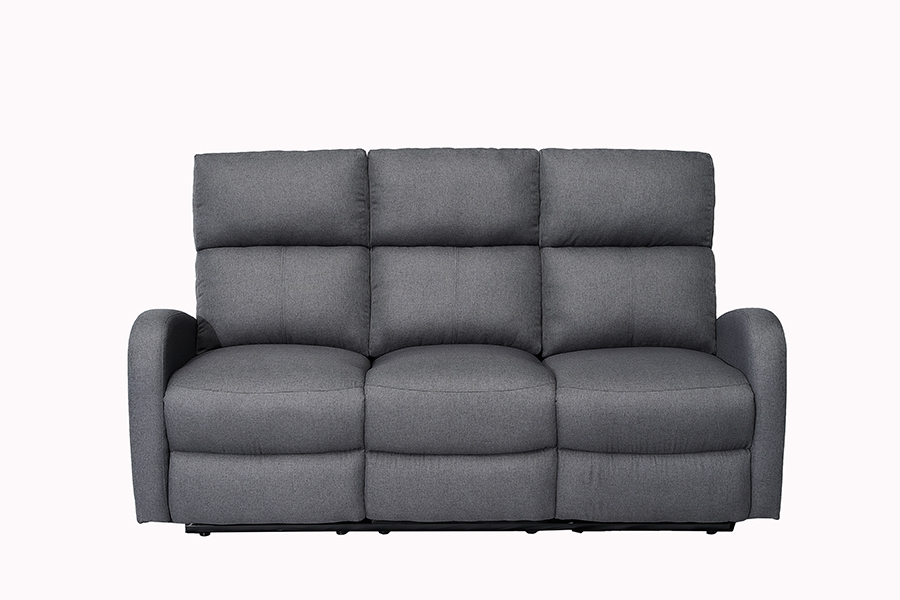 Compact Manual Reclining Sofa for Small Living Rooms and ApartmentsThis two-seat manual recliner suits tight spaces with its reduced footprint and pull-tab mechanism, offering comfortable seating without sacrificing floor area for other furniture.View Product →
Match the Sofa Type to Your Living Habits
Think about how the room is actually used before choosing a configuration. A formal sitting room rarely needs a large recliner, while a media room may not benefit from a stiff settee. Matching the sofa type to the dominant activity saves money and improves comfort.
| Sofa type | Best for | Typical width | Main trade-off |
| Loveseat | couples, compact rooms | 140 to 180 cm | limited lounging space |
| Three-seat sofa | families, flexible layouts | 200 to 240 cm | needs open floor area |
| Sectional with chaise | open-plan rooms, movie nights | 240 to 320 cm | can dominate a small room |
| Reclining sofa | rest and entertainment | 200 to 280 cm | needs rear wall clearance |
A loveseat is an excellent choice for a reading corner or a second seating group in a large room. A three-seat sofa remains the most balanced option for most homes because it seats several people while leaving the floor plan open. A sectional with a chaise turns an unused corner into a lounge zone and provides long leg support, which is valuable during movie marathons. If you are leaning toward a sectional but feel unsure about the configuration, review the five key sectional features explained in our sectional sofa selection guide before deciding.
Reclining sofas convert the living room into a relaxation space, but remember that the backrest mechanism needs space behind it. Wall-hugger designs reduce that requirement to a few centimeters, which keeps a narrow room more flexible.
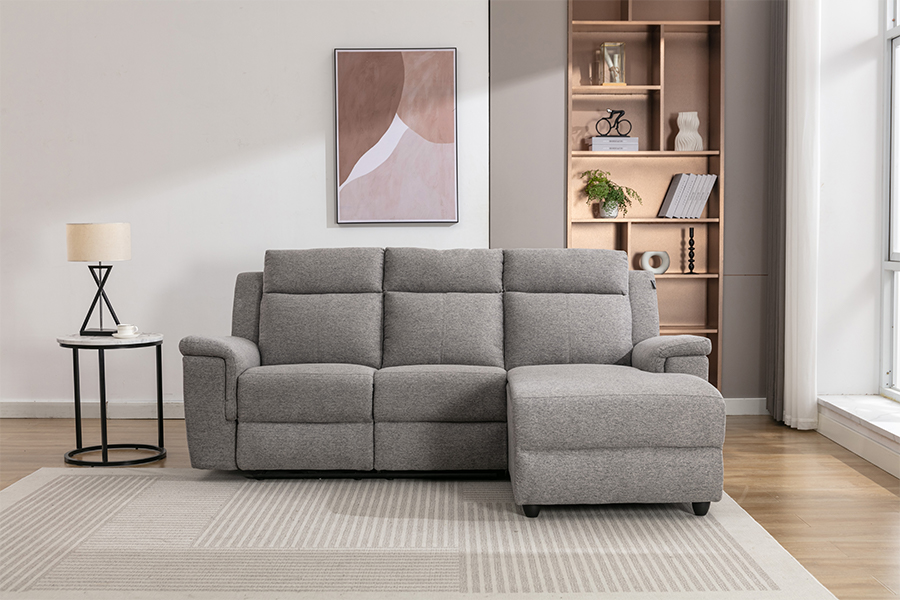 Manual Reclining Sectional Sofa with Chaise and Pillow-Top ArmrestsWith a pull-tab recliner on one side and a chaise on the other, this sectional provides versatile relaxation while its durable frame and high-resilience foam promise lasting support.View Product →
Inspect the Frame and Suspension, Not Only the Cushions
Upholstery is the first thing you see, but the frame and suspension decide whether the sofa keeps its shape after years of use. Buyers who only press the cushions often discover sagging seats and creaking joints within the first two years.
Frame materials
Kiln-dried hardwood is the most reliable base because it resists warping and holds screws firmly. Beech, birch, and rubberwood are common hardwood options. Thick plywood frames can be acceptable when the panels are dense and the joints are reinforced. Avoid frames assembled with light staples or thin particleboard, no matter how attractive the cover looks.
Joinery
Look for corner blocks, dowels, and screws combined with wood glue. These joints survive the repetitive load of sitting and standing. You can test rigidity by lifting one front corner of the sofa: if the opposite corner moves with it, the structure is solid. If the frame bends or creaks, long-term stability is questionable.
Suspension systems
- Sinuous wire springs support the seat from side to side and offer good resilience at a moderate cost.
- Elastic webbing straps give a softer initial feel but lose tension more quickly under heavy use.
- Individually wrapped springs or hand-tied springs distribute weight evenly and belong to the premium segment.
Choose Upholstery Based on Real Daily Conditions
The best upholstery is not the most expensive one; it is the one that matches how the sofa will be used. Consider children, pets, meals in front of the television, and direct sunlight before choosing a material.
Polyester and performance fabrics
Polyester fabrics are durable, colorfast, and easy to clean with a vacuum and a mild detergent. Performance polyester adds a protective finish that repels water and stains, which makes it a strong choice for busy family rooms. Thick polyester fabrics also hide minor surface irregularity and resist pilling.
Leather and faux leather
Genuine leather develops a natural patina and can last for decades with regular conditioning. Faux leather offers a similar appearance at a lower price and cleans easily with a damp cloth, but breathability depends on the backing. Faux air leather is a breathable variant that reduces the sticky feeling on warm days, a relevant point for homes without air conditioning.
| Material | Durability | Cleaning effort | Best suited for |
| Polyester | high | low | family rooms |
| Performance fabric | very high | very low | homes with pets and children |
| Faux leather | medium | very low | busy households on a budget |
| Genuine leather | high | medium | long-term investment |
For warm climates, breathable synthetic materials are worth investigating. A power reclining three-seater covered in faux air leather combines the easy cleaning of synthetic leather with improved airflow during long seating sessions.
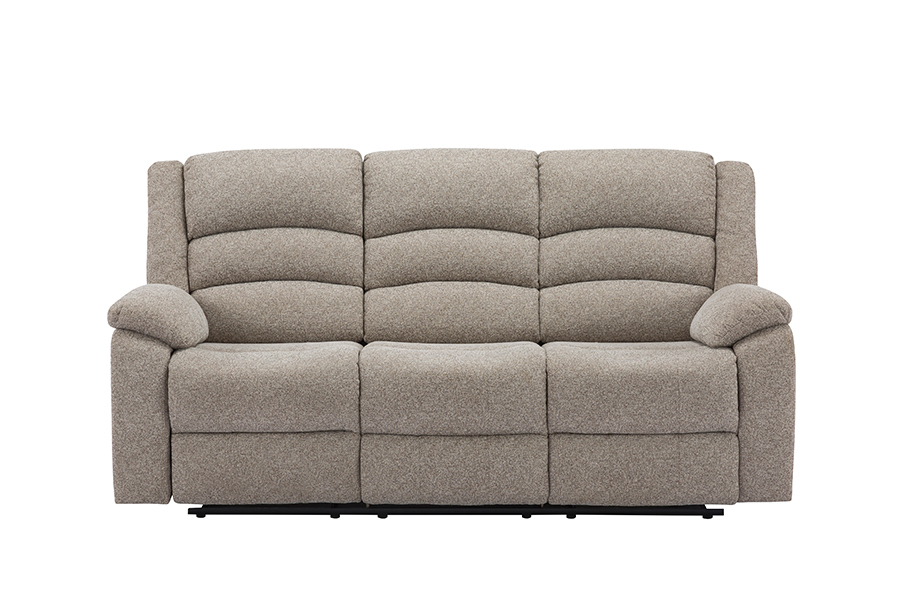
 Faux Air Leather Power Reclining Three-Seater Sofa with Dual ReclinersIdeal for family living areas, this power recliner combines easy-to-clean faux leather with one-touch adjustments on both sides, offering breathable comfort and quick assembly in about 15 minutes.View Product →
Even the best fabric ages faster when crumbs and dust settle into the seams. Vacuum the sofa weekly, treat stains immediately, and rotate seat and back cushions every three months. Keep the sofa away from prolonged direct sunlight to prevent fading.
Weigh Manual and Power Reclining Functions Carefully
Manual reclining sofas use a pull-tab or side-lever mechanism to release the backrest and adjust the seat angle. They are simple, more affordable, and rarely need repairs. Their limitation is a fixed number of positions, usually two or three depending on the design. A dual-sided manual reclining loveseat allows each person to adjust independently, which solves the classic conflict between partners with different preferences.
Power reclining sofas run on a low-voltage motor and allow smooth adjustment across the whole range. They are especially helpful for older users and anyone with limited hand strength. Many modern models integrate a charging port into the armrest as an invisible charger socket, keeping the design clean while adding practical convenience.
- Manual reclining: lower cost, simple maintenance, fixed positions, silent operation.
- Power reclining: continuous adjustment, easy control, charging option, requires a power outlet.
- Wall clearance: most mechanisms need 15 to 20 cm behind the backrest; wall-hugger designs reduce this to a few centimeters.
Ergonomics matter at every angle. Reading is generally comfortable at a backrest angle of 110 to 120 degrees, while sleep-like rest reaches about 140 degrees. Check that lumbar support stays in contact with your lower back throughout the whole range, and that the headrest never pushes the neck forward. Also confirm that armrests support the arms without raising the shoulders.
Fine-Tune Seat Depth, Height and Cushion Comfort
After the structure and materials, comfort comes down to proportions. Everyone is built differently, but the following ranges fit most adults and can be adjusted to your family profile.
- Seat depth: 50 to 55 cm suits average adults; deeper seats of 55 to 60 cm favor taller people and lounging positions.
- Seat height: 42 to 48 cm from the floor makes sitting down and standing up easy; lower seats feel casual but tire the knees.
- Backrest height: medium backrests support the shoulder blades; high backrests support the neck during reading and rest.
- Armrest height: 18 to 25 cm above the seat is comfortable for leaning, reading, and holding a phone.
Cushion fill and support
High-resilience foam with a density of roughly 28 to 35 kilograms per cubic meter provides firm support and keeps its shape over years of use. Foam wrapped in a layer of polyester fiber feels softer on the surface. Feather-and-foam blends deliver a plush feel but require daily fluffing. Pocket-spring cushions embed small springs inside the foam and combine surface softness with strong structural support.
Look at the seat structure details as well. A waterfall back reduces the gap behind the knees and improves circulation, and attached seat cushions prevent crumbs and pet hair from falling into crevices. Separate cushions are easier to flip and rotate, which evens out wear across the seating surface. Choose the approach that matches your cleaning routine.
A Field Checklist for the Showroom and the Order Form
Use this checklist when you test sofas in a showroom and when you review product specifications from an online supplier. It turns a subjective shopping trip into a structured evaluation.
- Room dimensions and delivery route measured and written down.
- Sofa width leaves at least 60 cm of walkway after placement.
- Frame material and joinery meet the expected quality level.
- Suspension supports the middle and front edge without touching the base.
- Upholstery matches the daily use, cleaning habits, and climate.
- Reclining function, wall clearance, and power outlet position confirmed.
- Seat depth and seat height fit the body of the main user.
- Cushions can be removed, flipped, and replaced when needed.
- Warranty, delivery time, and spare parts availability confirmed.
Frequently Asked Questions
Q1: What is the best sofa size for a small living room?
For a small living room, choose a compact two-seat sofa or a narrow three-seat model with a total width of 180 to 210 cm. Keep the seat depth under 55 cm so the sofa does not dominate the space. Compact manual reclining models add function without visibly increasing the footprint.
Q2: Which sofa fabric is easiest to clean?
Performance polyester and polyester tech fabrics are the easiest to maintain because they resist water, stains, and abrasion. A vacuum and a mild detergent solution handle routine cleaning. Faux leather is also easy to wipe, but breathability depends on the backing material.
Q3: Is a power reclining sofa worth the extra cost?
A power reclining sofa is worth the investment when the sofa is used for long periods every day, or when someone in the family has limited hand strength. Power models provide continuous angle adjustment and often include a charging port, but they need a nearby power outlet and involve more components to maintain.
Q4: How long should a quality sofa last?
A sofa with a kiln-dried hardwood frame, spring-based suspension, and high-density foam cushions can last 10 to 15 years under normal residential use. Frames made of particleboard or thin plywood often begin to sag within three to five years, regardless of how good the covers look.
Q5: Should I choose a sectional with a chaise for an open-plan living room?
Yes, if the room is wide enough to support an L-shaped layout without blocking the circulation. A sectional with a chaise fills a corner efficiently and offers excellent leg support for lounging. In a narrow room, a regular three-seat sofa plus a separate ottoman gives you more layout flexibility.
Related Products

 Floor 2 No.533 Shuangqiao Road, Dipu Street, Anji County, Huzhou City, Zhejiang Province, China.
 Josie@boshenfurniture.com
 0086-15105823033
Copyright © BOSHEN FURNITURE CO., LTD. All rights reserved.OEM/ODM Upholstered Seating Furniture Manufacturers
