 English
 Español
How to Check Sofa Frame Quality: 10 Practical Tests to Do Before You Buy
Posted by Admin | 11 Sep
The frame is the part of a sofa that sellers rarely show and buyers rarely ask about. Cushions get tested, fabrics get touched, and angles get admired, but the structure underneath carries the entire future of the piece. If you know how to check sofa frame quality, you can tell a five-year sofa from a fifteen-year sofa in a few minutes, without opening a single tool. This guide translates factory inspection logic into simple showroom checks that require no technical background and no disassembly.
The Frame Determines Everything Else
Every time someone sits down, the impact travels from the cushion to the springs and into the frame rails. Repeating that motion hundreds of times per month means the frame absorbs substantial and constant mechanical stress. Manufacturers who test their sofas for durability rarely see cushions fail before frames, because the frame is the foundation that holds every other component in alignment.
Frame failure develops slowly. It starts with a creak when you lean back, then becomes a visible dip in the middle seat, and eventually turns into a backrest that moves independently from the base. These are not fabric defects or cushion problems. They are structural signals that the frame has reached the end of its working life, and no amount of reupholstering will fix a broken skeleton underneath.
The practical consequence is simple: the material, joinery, and geometry of the frame decide whether a sofa survives five years or twenty. That is why frame inspection should always come first in your evaluation of any sofa, before color preference, cushion feel, or design details.
Frame Materials: What a Durable Frame Is Made Of
The wood species and its processing determine the mechanical properties of the frame. Not all wood behaves the same under repeated loading.
Kiln-Dried Hardwood
The most reliable frames are made from kiln-dried hardwood such as oak, ash, beech, or maple. Kiln drying removes moisture down to roughly 6 to 8 percent, which stops the wood from warping, shrinking, or cracking once the sofa is inside a heated and climate-controlled room. Hardwood density also keeps screw holes tight after repeated assembly and repair.
Softwood and Low-Density Lumber
Some frames rely on pine, fir, or other softwood to reduce costs. These woods are lighter and easier to machine, but they compress under high local pressure. The typical failure is not a dramatic snap; screw threads slowly strip out of the wood, corner blocks loosen, and the entire structure develops play over a few years of normal use.
Multi-Ply Plywood and Composite Panels
Multi-ply plywood made from five or more cross-banded hardwood veneers can be a valid frame material, especially in mid-range sofas. The key is the quality of the core. Thin decorative veneers laminated over low-density particleboard, by contrast, are inherently weak, especially at screw points and spring attachments.
The frame material comparison below summarizes what matters in everyday use.
| Frame Material | Typical Density | Main Weakness | Realistic Frame Life |
| Kiln-dried hardwood | 600-800 kg/m3 | Higher cost | 10-15 years or more |
| Softwood | 350-500 kg/m3 | Screw holes strip | 3-6 years with heavy use |
| Hardwood multi-ply plywood | 400-600 kg/m3 | Core quality varies | 7-10 years |
| Particleboard or MDF | 600-750 kg/m3 | Moisture and screw pull-out | 1-3 years as a sofa frame |
Joinery: Where the Frame Proves Its Quality
A frame can be made of excellent wood and still fail early if the joints are weak. How the rails connect to each other is the most informative single detail you can check.
Corner Blocks Are Non-Negotiable
At each corner, the front rail meets the side rail at a 90-degree angle. A quality frame reinforces that junction with a corner block, a triangular or square piece of wood glued in place and secured with at least two screws. The block prevents the joint from rotating and spreads the load over a larger surface. You can usually feel the corner block by pressing along the inner edge of the frame below the seat cushions.
Dowels, Screws, and Combination Joints
Dowels align the rails and increase the glued surface area. Screws add clamping force and allow future re-tightening. The most durable frames combine both methods, such as doweled rails reinforced by screwed corner blocks. Mortise-and-tenon joints, the historical gold standard, are rare in modern mass-produced furniture, so their absence alone should not be considered a defect.
Staples Are Not Structural Fasteners
Staples exist to hold fabric, webbing, and dust covers in place. When a frame uses staples as the primary connector between load-bearing rails, the joint depends on friction between thin wires and soft wood, which loosens quickly under repeated load. If you can see inside the frame through a zipper opening, look for how the structural members are fastened. Staple-only joints at stressed points are a clear downgrade in construction quality.
Rail Thickness and Center Support
Thin rails are the hidden weakness of many price-friendly sofas. As a general reference, the front rail of a three-seat sofa should be at least 5 centimeters thick in solid hardwood, or around 3 centimeters in multi-ply plywood. Thinner rails bow over time, especially in the middle where the heaviest pressure lands.
Long sofas also need internal support. If you can look underneath, check for a center brace running from the front rail to the back rail, or a fifth leg supporting the middle of the front rail. Without this support, the longest span of the frame will gradually sag under repeated sitting. Reclining mechanisms add further weight, so models with manual or power reclining functions are held to the same standard.
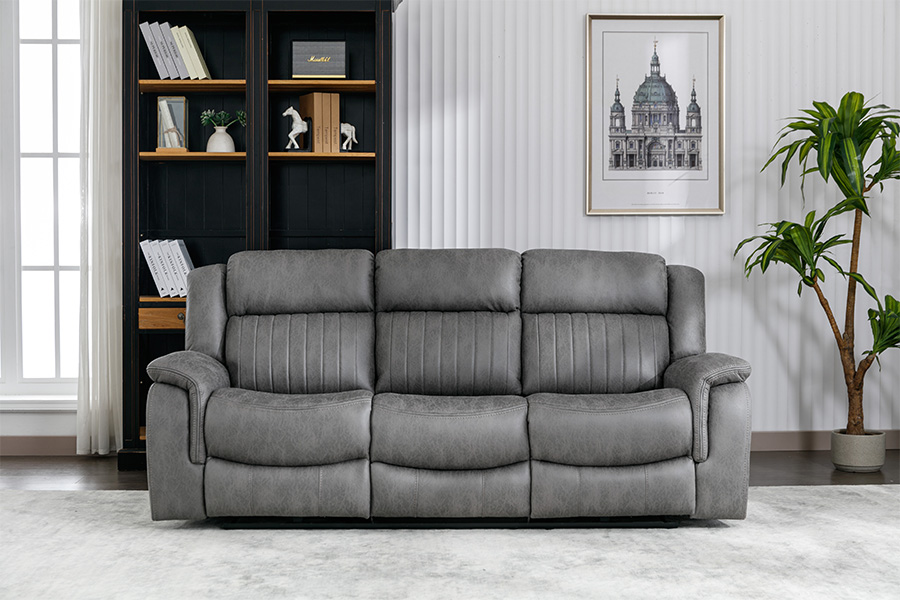
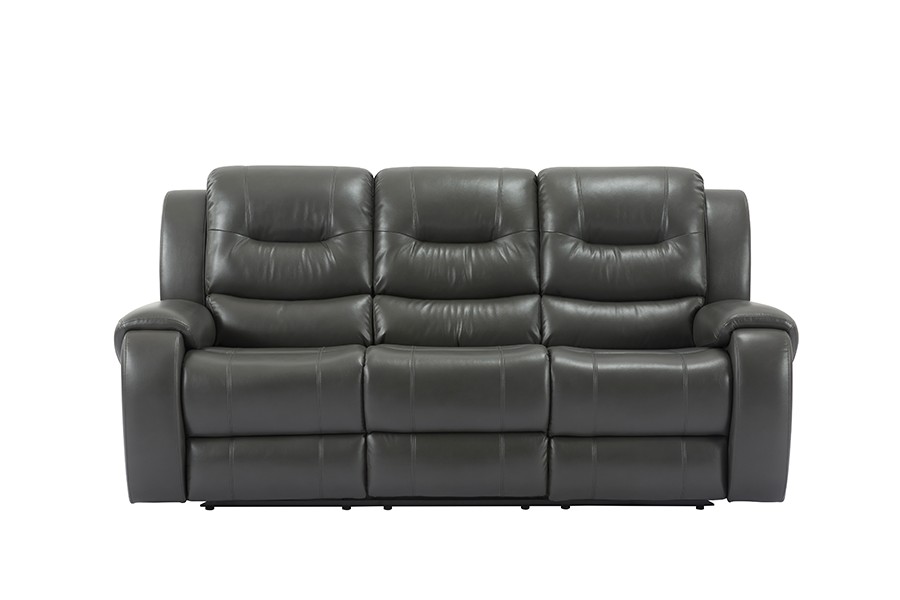
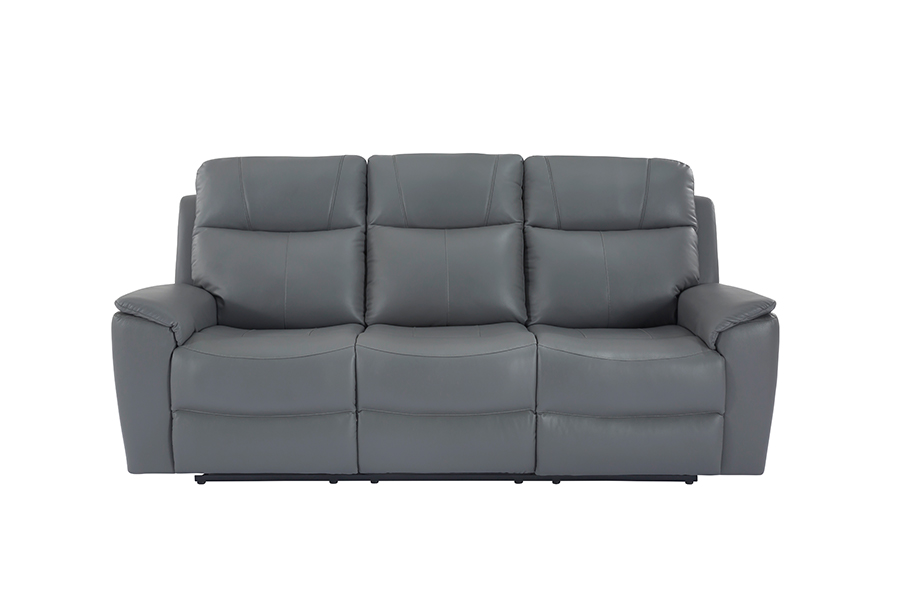 RC-2424 Faux Leather Dual-Sided Manual Recliner Sofa with Attached CushionsThis faux leather sofa features independent reclining on both end seats and a stationary middle seat. Its corner-blocked frame and metal-reinforced seating align with the article's guidance on checking internal support in long sofas.View Product →
How to Check Sofa Frame Quality in a Showroom
The following four tests need no tools, no permission to disassemble anything, and no experience. They follow the same principle that quality inspectors use on the factory floor: apply a controlled load and observe how the whole structure reacts.
Test 1: The Corner Lift Test
Stand at one end of the sofa and lift the front corner about 5 to 8 centimeters off the floor using your fingertips. Watch the opposite rear leg. On a rigid frame, that rear leg lifts almost simultaneously because the frame transmits the upward force through its bracing. On a weak frame, the corner bends before the diagonal leg moves, showing that the frame cannot resist diagonal torsion.
Test 2: The Backrest Twist Test
Stand behind the sofa, hold the top of the backrest at both ends, and push forward with your left hand while pulling backward with your right. This twisting load reveals loose joints. A solid frame stays silent and square. Creaks, clicks, or a visible parallelogram deformation all point to weak connections between the backrest frame and the seat base.
Test 3: The Deep Sit Test
Sit down in the center, then at each end, pressing your full weight into the seat and leaning into the backrest. The frame answer should be identical in all three positions. If the ends feel noticeably less supported, the side rails are undersized or the arm-to-frame junction lacks reinforcement. Clicking sounds during the transition from sitting to standing often mean that a rail has lost its connection on one side.
Test 4: The Knock Test
Knock on the front rail, the outside arm panels, and the upper back panel with your knuckles. Listen carefully to the sound. Dense hardwood and thick multi-ply plywood produce a dull, short tone. A hollow or ringing sound usually comes from a thin decorative layer stretched over a lightweight core, which is common in low-cost frames.
These four tests follow a logical sequence, from load transmission to sound analysis:
Suspension Systems and Their Demands on the Frame
The springs or webbing that hold the cushions are attached directly to the frame. Different suspension types create different stress patterns, so the system and the frame must be designed together.
Sinuous Springs
Sinuous, or S-shaped, steel springs are the most common suspension in today's sofas. They clip onto the front and back rails and provide firm elastic support. The quality check has two layers. First, press down to feel whether the springs return quickly and evenly. Second, if you can reach under the dust cover, check that each spring end is held by a dedicated metal clip, not by a nail driven into the wood.
Eight-Way Hand-Tied Coil Springs
Hand-tied coil spring systems are the traditional high-end construction. Each individual spring is tied in eight directions to its neighbors, distributing local loads across the entire seat grid. This system maintains constant tension on the rails, which is why hand-tied units are almost always paired with thick hardwood frames. If you meet a hand-tied sofa, ask for the rail thickness and wood species before assuming it is high quality.
Webbing
Webbing is acceptable in lighter seats and some stationary sofas. Good webbing is at least 6 to 8 centimeters wide and is tensioned during assembly across a supported frame. Short webbing straps attached to an open frame without a center rail will stretch quickly and leave the cushions sagging in the middle.
The Interaction Between Suspension and Frame
Whenever you test the seat suspension, remember that you are actually testing two parts together. If the seat feels bouncy or soft in the center but firm at the sides, the frame may be yielding under the spring load even if the springs themselves are healthy. This combined interpretation is how inspectors separate a good sofa from an average one.
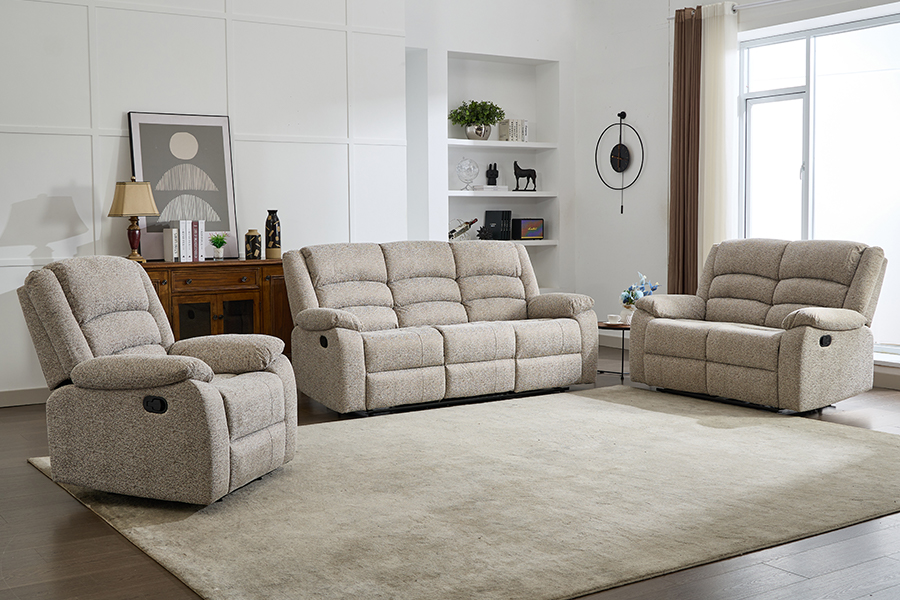
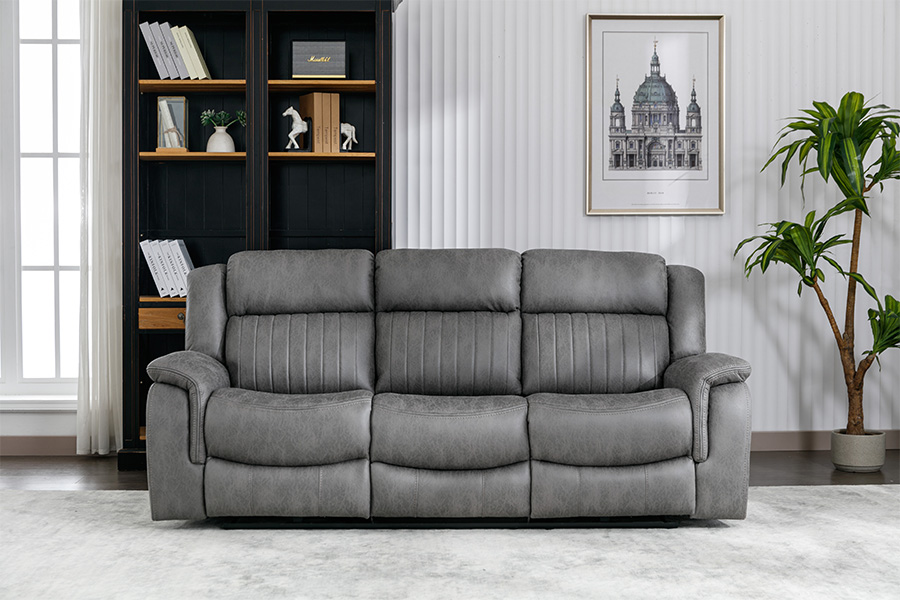 RC-7756 Large-Scale Manual Pull Tab Reclining Sofa with Polyester UpholsteryA spacious pull-tab reclining sofa with high-resiliency foam cushions and a corner-blocked, metal-reinforced frame. It suits the article's discussion of testing seat suspension by offering a design meant to maintain firmness across the seating area.View Product →
Frame Red Flags: A Quick Reference Table
Use this checklist while comparing sofas side by side. Every warning sign points to a specific structural weakness.
| Warning Sign | What It Indicates |
| Creaking when weight shifts | Loosening joints, often staple-based connections |
| Opposite rear leg stays down in the lift test | Diagonal flex, missing corner blocks or weak rails |
| Hollow sound when tapping panels | Thin surface layer over lightweight core |
| Sofa feels unusually light for its size | Low-density frame that will fatigue early |
| Visible gaps at the rail seams | Wood warped after assembly |
| Particleboard edge visible through zipper | Structural core is a cost-saving panel material |
| Recliner brackets bolted to softwood | Hardware will loosen with frequent use |
Frame inspection is only one part of long-term sofa care. Keeping the sofa away from prolonged direct sunlight and moisture protects both its wood structure and fabrics, and following maintenance tips to extend sofa life reduces the risk of early structural wear.
Questions You Must Ask When the Frame Is Not Visible
Online shopping and sealed showroom models do not always allow direct frame inspection. In those cases, turn this into your questionnaire:
- Which wood species is used in the frame, and was it kiln-dried?
- Are corner blocks fitted at all four corners, and how are they fixed?
- How are the rails joined: screws, dowels, or a combination?
- What suspension system is used, and how is it attached to the frame?
- What are the dimensions of the front and side rails?
- Does the warranty cover the frame structure, and for how many years?
A manufacturer that builds to a verifiable standard answers directly. A vague response is itself a data point: it means no one can confirm what is holding the sofa together.
Sectional sofas multiply the structural risk because each module has its own frame, and the connectors between modules add potential failure points. When comparing different sectional models, check the module connections as carefully as you would inspect the wood frame of each individual segment.
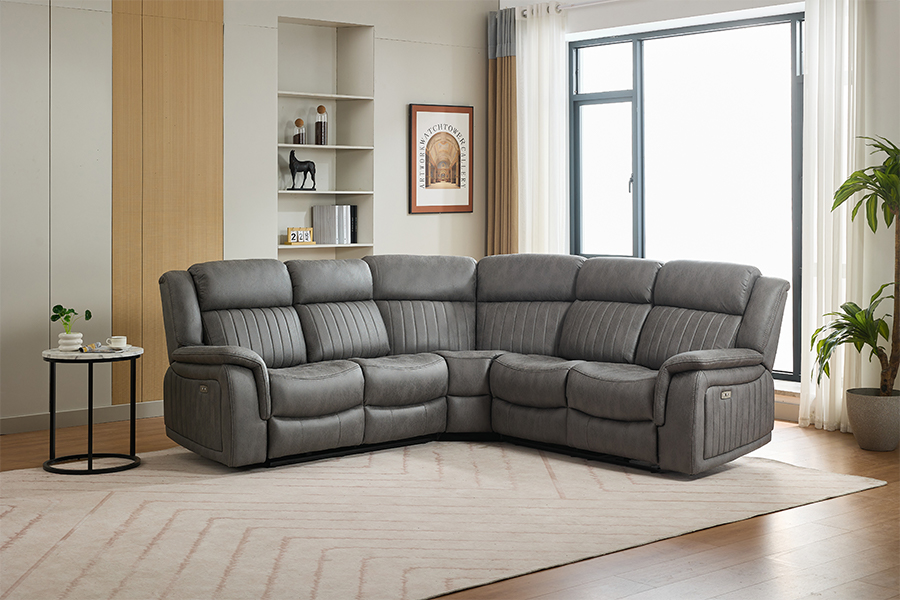
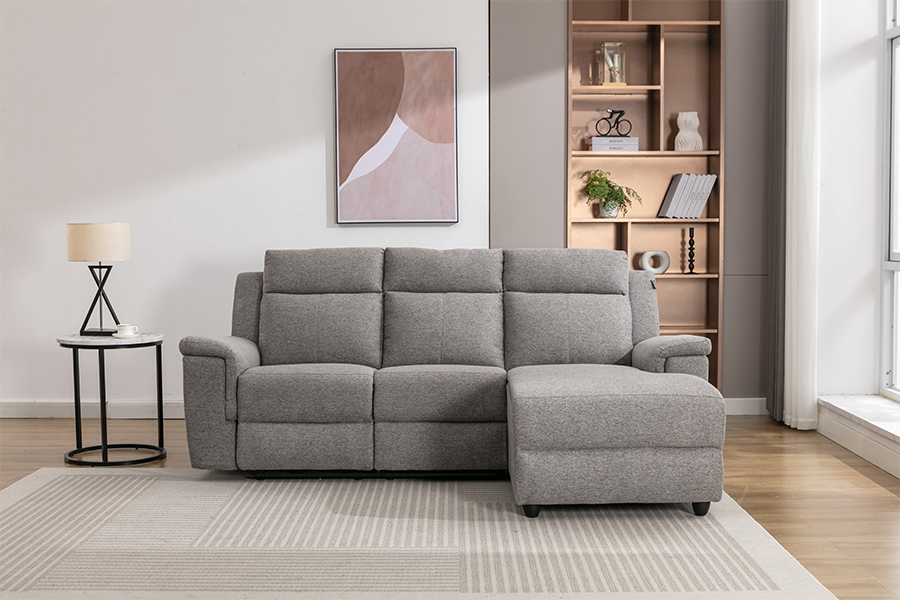 RC-7088 Polyester Fabric Reclining Sectional Sofa with Chaise and Attached CushionsThis sectional combines a left-arm pull-tab recliner with a right-arm chaise, using a corner-blocked frame and metal-reinforced seating. The article warns that sectional connectors add risk, making this model's durable construction a key point to examine.View Product →
The same inspection rules apply to every sofa size. As a buyer, you can also send the frame questions to a manufacturer before moving forward with an order.
Frequently Asked Questions About Sofa Frame Quality
Q1: What is the best wood for a sofa frame?
Kiln-dried beech, oak, and ash combine density with dimensional stability, which makes them the most reliable frame woods. Maple is also suitable. Avoid softwoods and any frame with structural members made from particleboard or MDF.
Q2: Does a sofa frame need a center support leg?
Any three-seat sofa with a span longer than about 180 centimeters should have a center support system, either a brace between the rails or a center leg touching the floor. Without it, the front rail will bow and the middle seat will sag.
Q3: Can I check frame quality without unzipping the sofa?
Yes. The corner lift test, backrest twist test, deep sit test, and knock test can be performed entirely from the outside. They cannot show the exact wood species, but they will reveal structural rigidity and loose connections.
Q4: Why does a sofa creak when I shift my weight?
Creaking is usually caused by nails, staples, or screws where two structural members rub against each other. It may indicate that the joint is moving microscopically under load, which can be an early sign of future failure.
Q5: Are heavier sofas always better?
Weight is only a rough guide. A heavy sofa could be built from dense particleboard, which is less durable than a lighter frame made of multi-ply hardwood plywood. Use weight as a secondary signal, not as the final verdict.
Frame quality is the most objective dimension in a sofa purchase. Fabric color is a preference, spring type is a compromise, but the frame is a measurable fact. Spend the four minutes on the tests described above, ask the structural questions directly, and compare what the seller says with what your hands feel. That short investment today decides whether your sofa remains comfortable and safe for the next decade.
Related Products

 Floor 2 No.533 Shuangqiao Road, Dipu Street, Anji County, Huzhou City, Zhejiang Province, China.
 Josie@boshenfurniture.com
 0086-15105823033
Copyright © BOSHEN FURNITURE CO., LTD. All rights reserved.OEM/ODM Upholstered Seating Furniture Manufacturers
