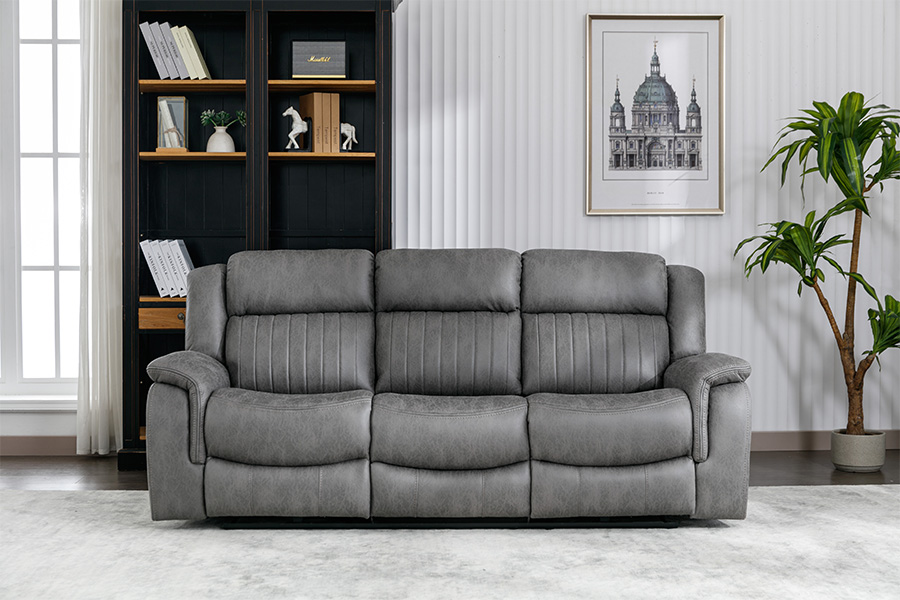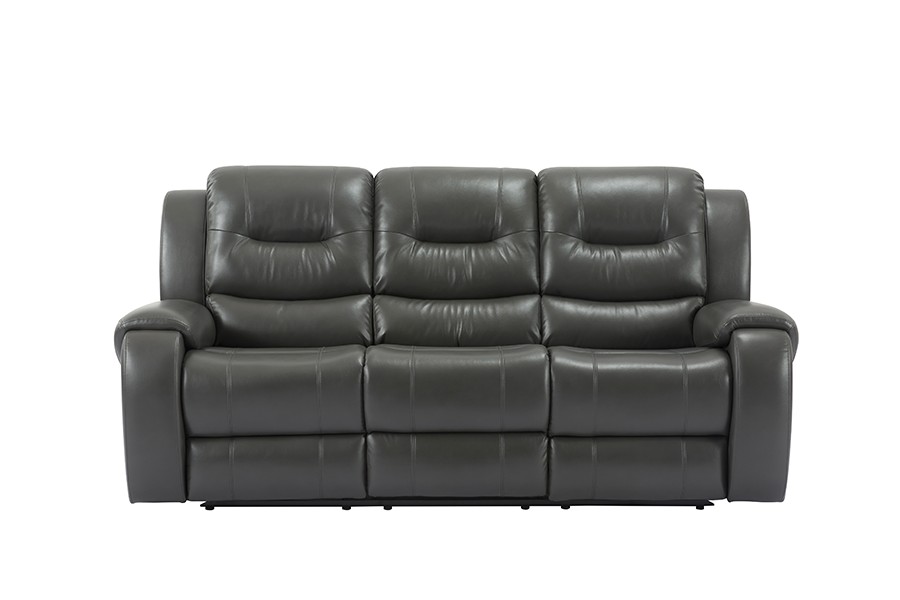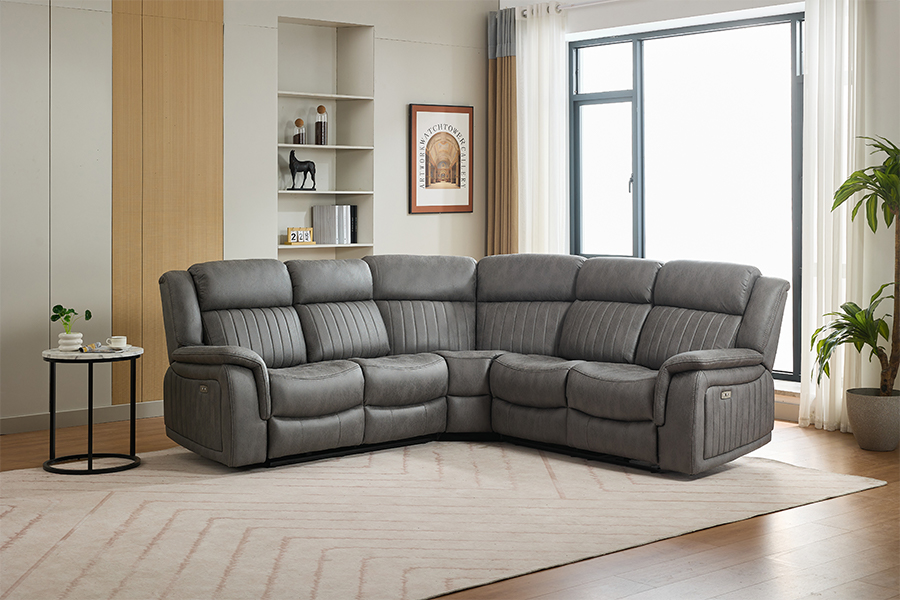
Importers and furniture wholesalers rarely lose money on the visible parts of a reclining sofa. Losses come from the hidden parts: a mechanism that fails after 8,000 cycles, a plywood frame that delaminates in humid container conditions, or a fabric that pills after three months of retail display. A manual reclining sofa removes the electric motor from the risk equation, but it does not remove the need for a disciplined specification review.
This guide is written for buying agents, importers and retail category managers who evaluate reclining seating at container volume. It covers mechanism geometry, frame grading, upholstery selection, foam density, loading math and OEM documentation. Each section includes the parameters that should appear on a purchase order rather than in a brochure.
Sourcing principle: a manual pull-tab recliner is a mechanical product first and a furniture product second. Approve the mechanism and frame before approving the cover.
A manual reclining sofa uses a lever, strap or pull tab to release a spring-loaded linkage that unfolds the footrest and tilts the back. The system has four load-bearing zones: the pull handle, the release cable or rod, the ratchet and latch assembly, and the seat-to-back pivot. Understanding these zones lets a buyer write a meaningful inspection clause.
Pull-tab systems are common in mid-price recliner sofa lines because the tab can be mounted on the outside arm, inside the seat gap or under the seat front. The actuation force typically sits between 25 N and 45 N; anything above 50 N suggests a stiff cable routing or an undersized return spring. Buyers should request a force test at the first, middle and last recline positions, because cable friction changes as the linkage rotates.
The comparison matters most at wholesale volume, where after-sales cost is a category decision rather than a single-unit issue. A manual recliner couch has no transformer, no motor, no hand control and no wiring harness, which removes four failure points and four spare-part SKUs from the retail support chain.
| Evaluation point | Manual pull-tab recliner | Power recliner |
|---|---|---|
| Unit cost at factory | Lower, fewer components | Higher, motor and control add cost |
| After-sales parts | Handle, cable, spring, latch | Motor, transformer, hand control, harness |
| Electrical compliance | Not applicable | Requires plug and voltage certification per market |
| Cycle life risk | Mechanical wear, predictable | Motor and electronics wear, variable |
| Container weight | Lighter per unit | Heavier per unit |
A wholesale manual reclining sofa is judged by how it behaves in a warehouse, a container and a retail floor. The four variables below drive return rates more than any style decision.
Request a plywood frame specification with grade and thickness, not simply "plywood frame sofa" language. A typical durable build uses 15 mm to 18 mm multi-ply hardwood plywood with corner blocks and glued, stapled and screwed joints. The steel mechanism should be described by steel thickness, usually 1.5 mm to 2.0 mm, and by a salt-spray test result if the market is coastal.
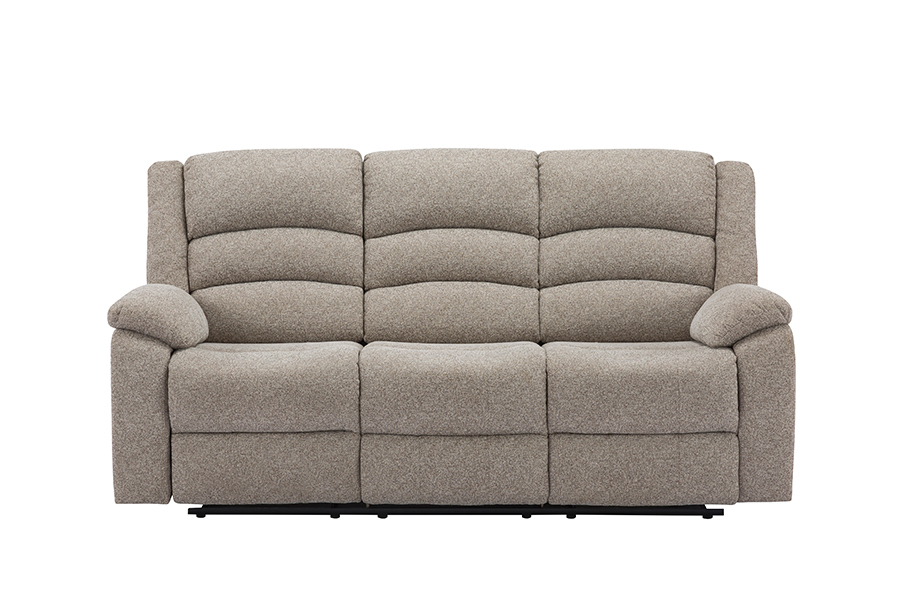
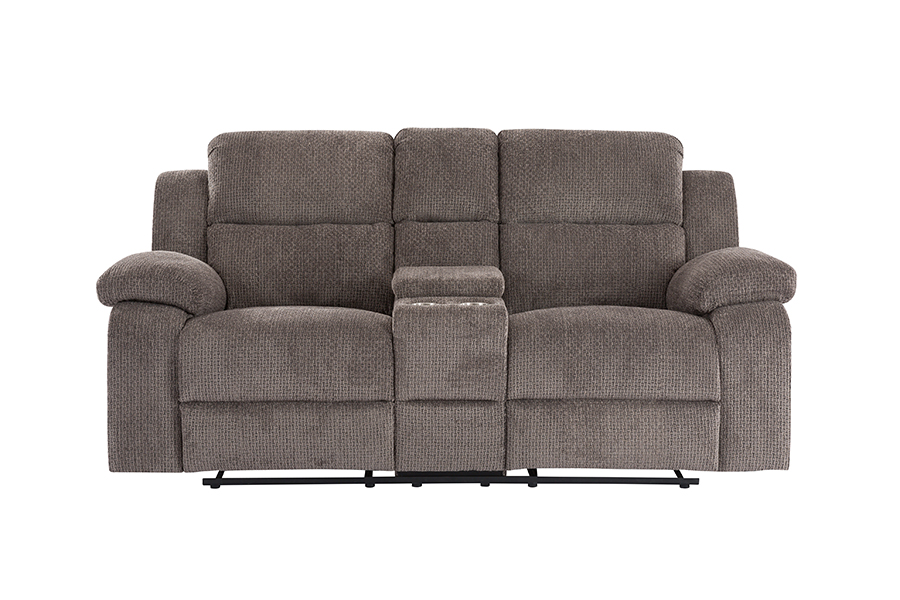
Chenille fabric manual reclining sofa programs remain popular because chenille offers a soft hand feel with a dense pile that hides seam lines on large seat platforms. Buyers should ask for Martindale abrasion results, pilling grade and colorfastness to light and rubbing. A practical target for living room upholstered sofa use is 25,000 Martindale cycles or higher, with pilling grade 4 or better.
| Fabric type | Hand feel | Abrasion outlook | Best fit |
|---|---|---|---|
| Chenille | Soft, dense | Good at 25,000 plus cycles | Mid to upper retail tiers |
| Microfiber | Smooth, uniform | Good, easy to clean | Family and rental channels |
| Linen blend | Textured, breathable | Moderate | Warm-climate markets |
| Faux leather | Firm, wipeable | Depends on backing | Contract and hospitality |
Ask for foam density in kilograms per cubic meter rather than "high resilience foam sofa" wording alone. Seat cores in the 28 to 35 kg/m3 range with a high-resilience grade hold shape better under repeated recline loading. A layered build of foam, polyester fiber wrap and a spring coil pack distributes pressure and prevents the seat from bottoming out at the frame rail.
Loading capacity decides landed cost per unit. A three-seat platform around 210 cm wide typically loads 60 to 70 pieces in a 40HQ container when packed in cartons with the back detached. Confirm whether the back is knock-down or fully assembled, because that single choice can change container count by 15 to 25 percent.
210 cm
Typical 3-seat width
66 pcs
40HQ loading reference
25,000
Target mechanism cycles
30 kg/m3
Seat foam density reference
Supplier qualification for a wholesale manual reclining sofa program should start with documents, not samples. A factory that cannot produce a mechanism test log, a foam density certificate and a packaging drop-test record is unlikely to manage a repeat order consistently.
During a factory visit, watch the upholstery line rather than the showroom. Check whether frame moisture is measured, whether corner blocks are glued before stapling, and whether every mechanism is cycled once before packing. These three checkpoints reveal more about consistency than a finished sample.
Audit tip: ask for the mechanism supplier's part number and confirm it appears on the purchase order, so a later substitution cannot pass unnoticed.
Manual recline suits channels where electrical certification, installation and after-sales support are costly or impractical. The application list below reflects common assortment planning logic rather than a single market.
In each case, the buying question is the same: does the manual pull tab reclining sofa platform match the room depth, the traffic level and the cleaning routine of the end user? A 210 cm three-seat unit with a 90 cm recline clearance fits most residential layouts, but hospitality buyers often specify a tighter wall clearance.
Vague specification language is the most common cause of first-order disputes. The table below lists fields that should be locked before production begins, with a reference value for a three-seat chenille model.
| Field | Reference value | Why it matters |
|---|---|---|
| Overall width | 210 cm | Drives carton size and container math |
| Seat height | 48 to 50 cm | Affects retail comfort perception |
| Frame material | 15 to 18 mm plywood | Controls structural life |
| Mechanism steel | 1.5 to 2.0 mm | Controls load rating and wear |
| Seat foam density | 28 to 35 kg/m3 | Controls shape retention |
| Fabric abrasion | 25,000 Martindale minimum | Controls pilling and wear claims |
| Loading quantity | 66 pcs per 40HQ | Controls freight cost per unit |
A manual reclining sofa uses a pull tab, strap or lever connected by cable or rod to a spring-loaded linkage. Pulling the tab releases a ratchet latch, the footrest extends and the back tilts to one of two or three lock positions. There is no motor, transformer or hand control, so the only maintenance parts are the handle, cable, spring and latch.
For most container-volume programs, a manual recliner couch is easier to support because it avoids electrical certification, voltage variants and motor spare parts. Power recline makes sense when the retail channel expects motorized features and can handle after-sales parts. The cost gap per unit is typically driven by the motor, control and wiring, not by the frame or fabric.
Chenille works well when the abrasion result reaches 25,000 Martindale cycles or higher and pilling is grade 4 or better. Confirm colorfastness to light and rubbing as well, because a neutral-tone sofa placed near a window can fade unevenly if the dye fastness is weak. Request the fabric test report for the exact production batch, not a generic reference sheet.
A 210 cm three-seat unit with a knock-down back typically loads 60 to 70 cartons in a 40HQ container. The difference between 60 and 70 usually comes from carton design, back detachment and arm packing rather than from the sofa width alone. Always confirm the loading plan with a carton drawing before signing the purchase order.
The brief should specify overall dimensions, frame material and thickness, mechanism steel gauge and cycle target, foam density, fabric composition and test results, carton drop standard, label and barcode format, and target loading quantity. For ODM work, add the sample approval timeline, tooling ownership and the change-control process for component substitution.
Run 30 consecutive open and close cycles on at least three units per batch. Measure pull force at the first, middle and last position, listen for cable rub against the frame, confirm the latch holds at every lock position, and check that the footrest closes fully without manual assistance. Record the results against the mechanism part number on the purchase order.
A stable wholesale manual reclining sofa program is built on four fixed points: a mechanism specification with a cycle target, a frame specification with material thickness and joint detail, a fabric specification with test results, and a loading plan tied to a carton drawing. When those four points are written into the purchase order, the sample becomes a reference rather than an exception.
Buyers who treat the manual reclining sofa as a mechanical assembly first tend to see fewer returns and fewer mid-season specification disputes. Start with the mechanism and frame, confirm the fabric and foam with batch-level test data, and lock the loading plan before production. For buyers evaluating a three-seat chenille platform, the BS-RC2491 model page lists the reference dimensions and loading quantity, and the sales team can provide the mechanism and foam test documents on request.
For quotation, OEM options or container loading confirmation, contact the sales team with your target market, quantity and fabric direction.
Related Products

Copyright © BOSHEN FURNITURE CO., LTD. All rights reserved.OEM/ODM Upholstered Seating Furniture Manufacturers